Fireplace Repair in Hopatcong, NJ
Fireplace repair in Hopatcong, NJ covers the parts of the system you can see and touch from the living room: the firebox, the damper, the smoke chamber above it, and the doors, glass and gaskets on inserts and stoves. Most faults are small and fixable once the cause is found.
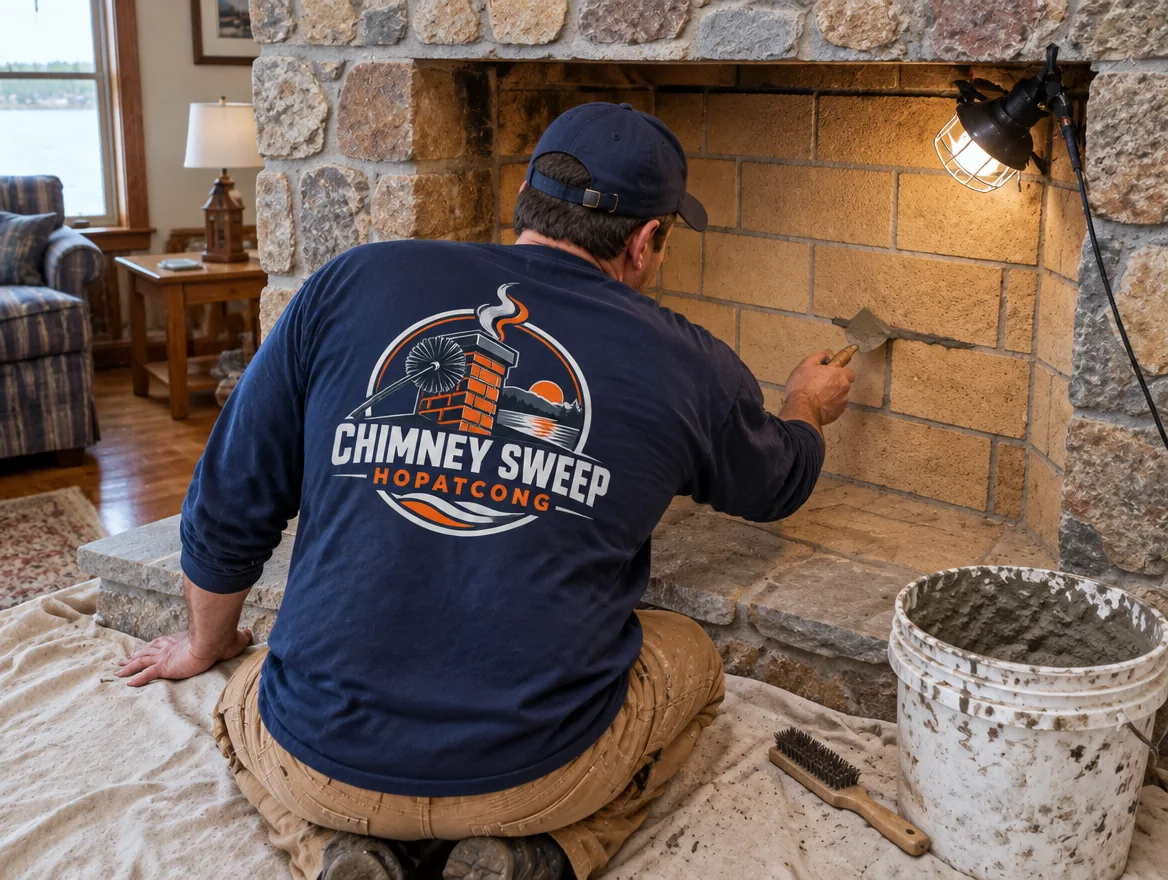
Firebox, firebrick, damper, smoke chamber, doors, glass and gaskets.
A fireplace that smokes into the room.
Masonry fireplaces, prefabricated fireplaces, inserts and wood stoves.
The parts of a fireplace that wear out
Firebox and firebrick
The firebox is lined with firebrick laid in heat-resistant mortar. Years of heating and cooling open the joints and eventually crack the bricks. Gaps in the firebox let heat reach the masonry behind it. Loose joints are raked out and repacked with refractory mortar, and broken bricks are replaced.
Prefabricated fireplaces use cast refractory panels in place of brick. A panel with a crack wide enough to fit a coin edge, or one that is crumbling, is replaced with a panel made for that model.
The damper
The damper is the metal plate that closes the flue when the fireplace is not in use. Rust and warping leave it stuck open, stuck shut or unable to seal. A throat damper can sometimes be freed and repaired. When it cannot, a top-sealing damper mounted at the top of the flue is a common replacement.
The smoke chamber
Above the damper, the smoke chamber funnels smoke into the flue. Many were built with stepped, rough brick that slows the smoke and collects creosote. Coating the chamber smooth with refractory mortar, known as parging, improves draft and makes it easier to keep clean.
Why a fireplace smokes
Smoke in the room has a short list of causes: a flue that needs a sweep, a blocked or missing cap, a damper that will not open fully, a flue that is too small for the fireplace opening, or a tightly sealed house that cannot supply enough air. Each has a different fix, which is why the cause is worked out before anything is repaired.
Inserts and wood stoves
Door gaskets flatten and stop sealing, glass cracks, and baffles and firebrick inside a stove burn out. These are routine parts. Many Hopatcong homes that were converted from seasonal use rely on a stove or insert for real heat, so keeping it tight matters. A problem in the flue above it belongs under liner repair.
Three kinds of fireplace, three kinds of repair
Built on site
Firebrick, a cast iron damper and a brick smoke chamber. Repairs are mortar and masonry work.
Factory built
A metal firebox with refractory panels and a metal chimney. Repairs use parts matched to the unit.
Closed combustion
A sealed firebox with a door. Repairs centre on gaskets, glass, baffles and the connection to the liner.
Signs a fireplace needs repair
- Smoke rolling out of the openingA draft, damper or flue problem.
- Gaps between the firebricksMortar joints have burned out.
- A damper that will not move or sealRusted, warped or off its track.
- A cold draft from the fireplaceThe damper is not closing.
- Cracked panels in a prefabricated unitThe panel has reached the end of its life.
- A stove door that closes without resistanceThe gasket has flattened and is leaking air.
Common questions about fireplace repair
Is it safe to use a fireplace with cracked firebrick?
Hairline cracks in a brick are normal. Open joints, loose bricks or a crack you can fit a coin into mean heat can reach the masonry behind, and the firebox should be repaired first.
Can a rusted damper be replaced without rebuilding the fireplace?
Usually. A top-sealing damper is installed at the top of the flue and operated by a cable in the firebox, so the old throat damper does not have to be cut out of the masonry.
Do you repair gas fireplaces?
This page covers wood-burning fireplaces, inserts and stoves. Call to ask about a gas unit and we will tell you plainly whether it is something we handle.