Chimney Cap Installation in Hopatcong, NJ
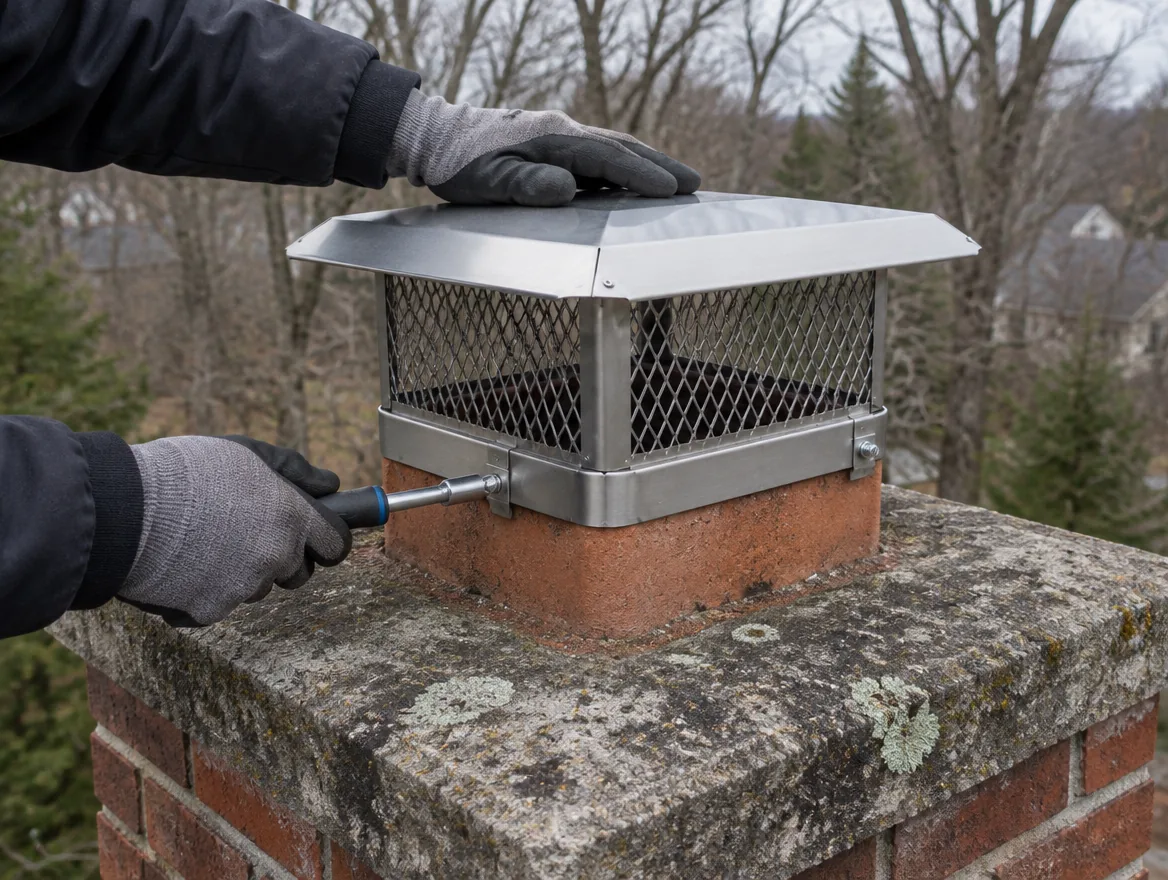
Chimney cap installation in Hopatcong, NJ is one of the smallest jobs on a chimney and one of the most useful. A cap is a metal cover with mesh sides fitted over the flue opening. It keeps rain, animals and leaves out while letting smoke and flue gas escape.
Rain, snow, leaves, birds, squirrels, raccoons and stray sparks.
Stainless steel and copper last. Plain galvanized steel rusts sooner.
When the mesh is torn, the lid is loose or rust is staining the crown.
What a chimney cap does
An open flue is a hole in the roof. Every storm sends water straight down it, where it soaks the liner, rusts the damper and mixes with soot into an acidic sludge that eats at mortar. A cap puts a lid over that opening.
The mesh sides do a second job. Chimneys are warm, sheltered and hollow, which makes them attractive to nesting birds and to squirrels and raccoons. A nest can block a flue completely, and a blocked flue pushes smoke and carbon monoxide back into the house. Mesh keeps animals out without restricting the draft.
The same mesh works as a spark arrestor. It breaks up embers before they can land on the roof or in dry leaves nearby.
Wooded lots and wind off the water
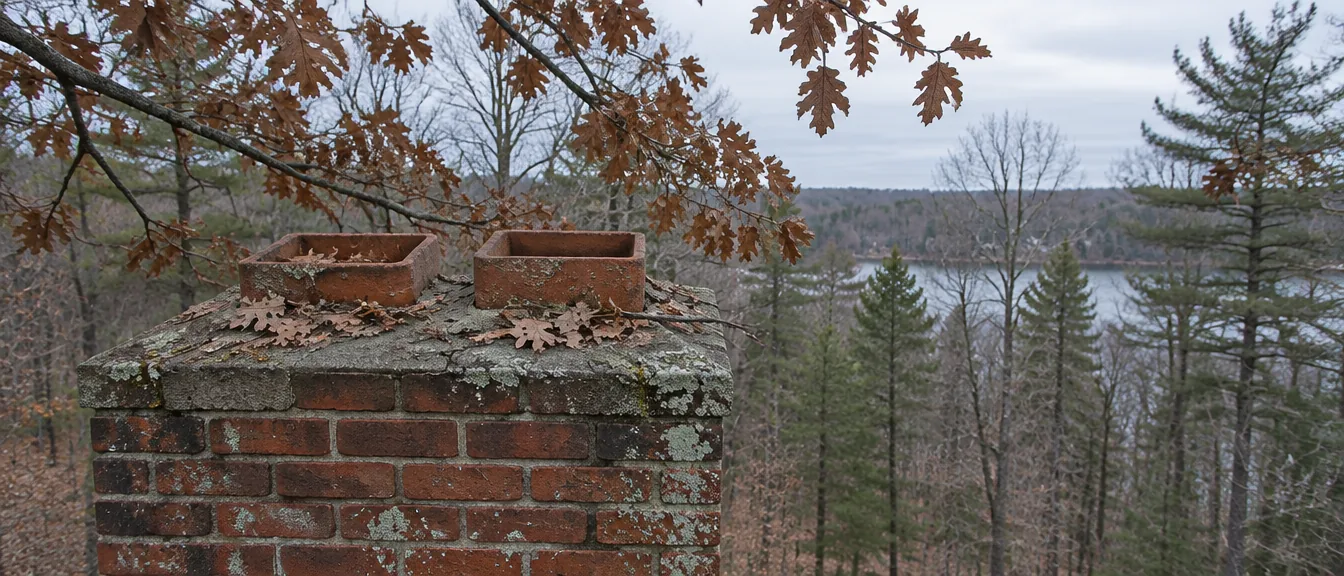
Much of Hopatcong is built on wooded hillsides around the lake. Trees close to a roof drop leaves, seeds and twigs into any uncapped flue, and they give animals an easy route onto the chimney. Open water also means gusty wind, and wind blowing across or down a flue can push smoke back into the room. A cap with a solid lid reduces that, and special draft-style caps exist for chimneys with a persistent problem.
Getting the fit right
Caps are not one size. A single clay flue tile takes a cap that clamps to the tile. A chimney with two or more flues is often better served by one larger cap fixed to the crown that covers them all. Round metal chimneys on prefabricated fireplaces and stoves use caps made for that specific pipe.
A cap is fitted after the flue has been checked. There is little point covering a chimney that needs a sweep or has a cracked crown under the cap's base.
Three ways to cover a flue
Clamp-on cap
Fastens to one clay flue tile with screws. The standard choice for a chimney with a single exposed tile.
Crown-mounted cap
One larger cap fixed to the crown that covers two or more flues and shelters more of the crown itself.
Pipe cap
Made for a round metal chimney on a prefabricated fireplace or wood stove, matched to the pipe size and brand.
Signs you need a new chimney cap
- You can see open flue tile from the yardThere is no cap at all.
- Water or rust in the firebox after rainRain is falling straight down the flue.
- Scratching, chirping or a bad smellAn animal or a nest is in the chimney.
- Leaves and twigs on the damperDebris is dropping in from above.
- Rust streaks down the crownA galvanized cap is corroding.
- Smoke puffing back on windy daysWind is driving down the flue.
Common questions about chimney caps
Does every chimney need a cap?
Every flue open to the sky benefits from one. That includes flues for furnaces and water heaters as well as fireplaces and stoves.
Will a cap affect the draft?
A correctly sized cap does not reduce draft. A cap that is too small for the flue or has clogged mesh can, which is why sizing matters and why the mesh is checked during a sweep.
Stainless steel or copper?
Both hold up for many years. Stainless is the practical default. Copper costs more and is usually chosen for its look on a prominent chimney.