Chimney Repair in Hopatcong, NJ
Chimney repair in Hopatcong, NJ usually starts with water. A cracked crown, an open mortar joint or loose flashing lets rain into the masonry, and the next hard freeze turns a small gap into a bigger one. Repairs deal with the entry point first, then the damage it caused.
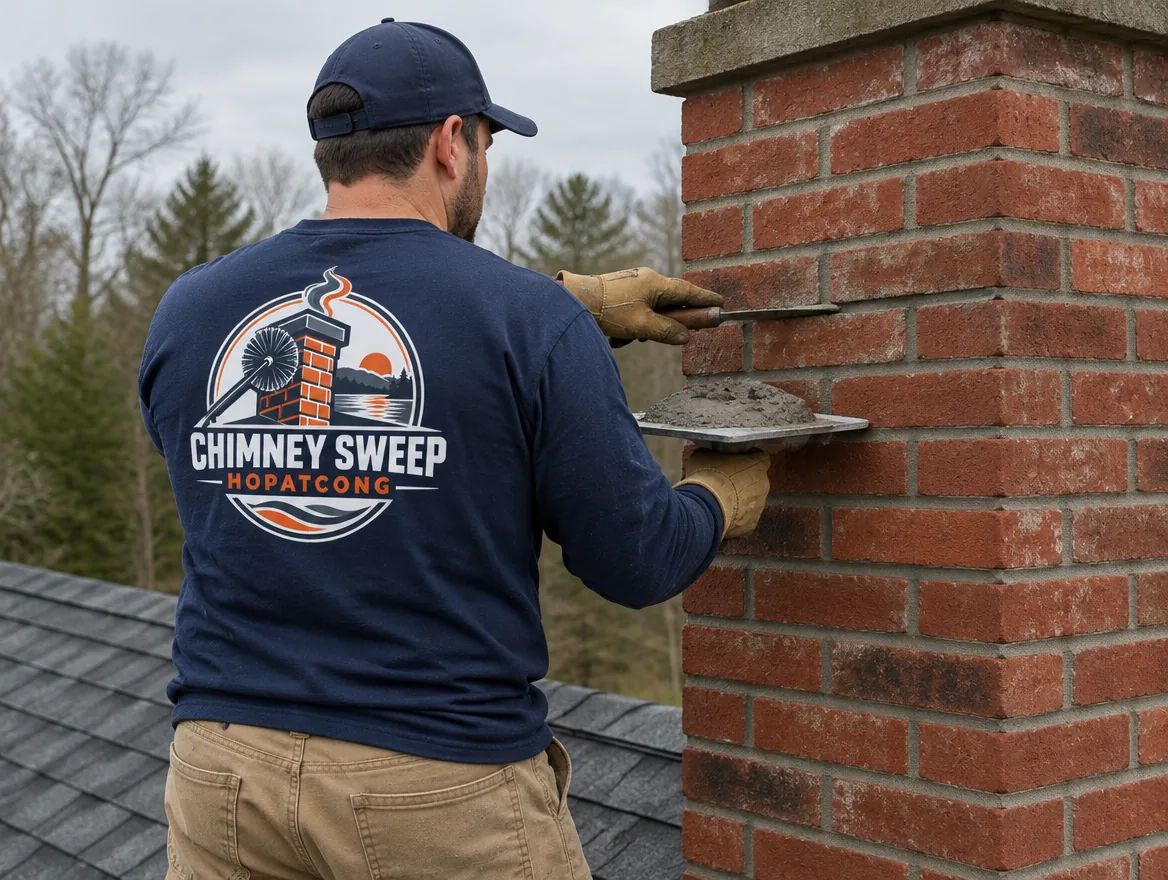
Water entering at the crown, the flashing or open mortar joints.
Late winter. Repeated freezing and thawing breaks wet masonry apart.
Spring to early fall, when mortar and sealants can cure properly.
Where chimneys fail, from the top down
A chimney is the most exposed piece of masonry on a house. It stands above the roofline with weather on all four sides, and almost every repair traces back to one of four places.
The crown
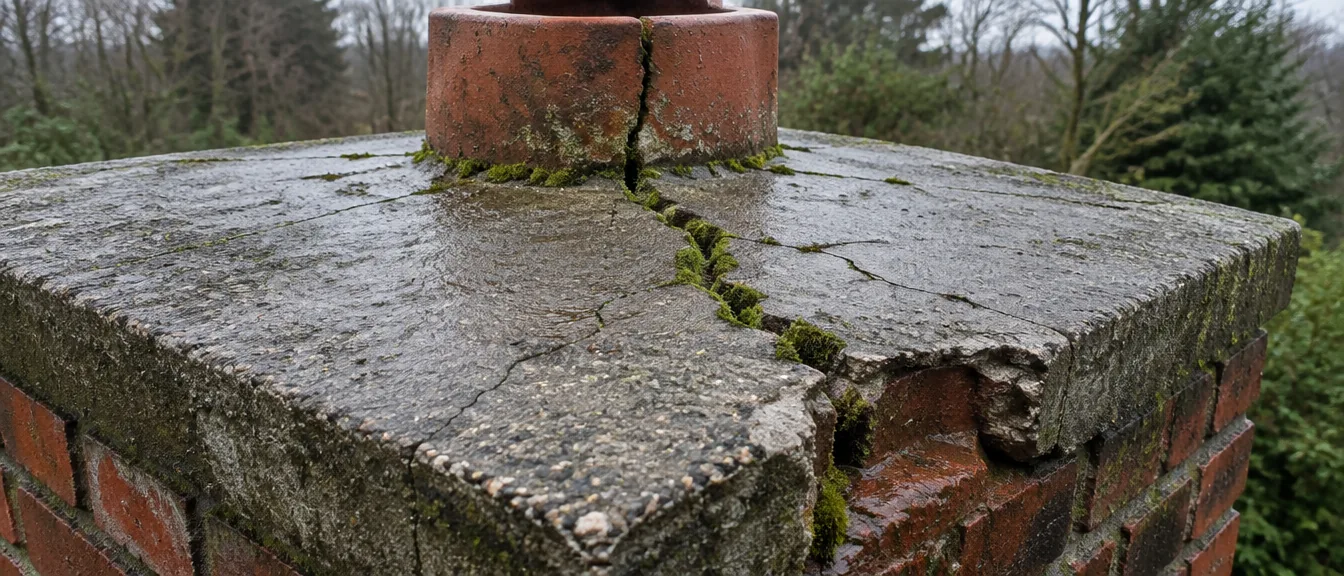
The crown is the sloped cement cap that covers the top of the stack around the flue. It is meant to shed water away from the brick. Once it cracks, rain runs straight into the core of the chimney. Small cracks can be sealed. A crown that has broken up or was poured too thin is removed and rebuilt.
The flashing
Flashing is the layered metal that seals the joint between the chimney and the roof. When it lifts, rusts through or loses its sealant, the leak usually shows up as a ceiling stain close to the chimney. Depending on its condition it is resealed or replaced.
The mortar joints
Mortar wears faster than brick. Joints that have receded or crumbled are ground out and repacked with new mortar, a job called repointing or tuckpointing. Done in time, it keeps the bricks themselves from loosening.
The brick
Brick that has absorbed water sheds its face in flakes, known as spalling. Individual bricks can be cut out and replaced. When spalling runs through several courses, the damaged section is rebuilt from sound masonry upward.
Not sure which of these you are looking at? A chimney inspection will tell you, and a missing chimney cap is often part of the story.
Seal, repoint or rebuild
Seal and patch
Hairline crown cracks, small flashing gaps and isolated joint wear. Caught early, these are the least disruptive repairs.
Repoint and replace
Receded joints across a face of the chimney, a few spalled bricks, or flashing that is past resealing.
Partial rebuild
Loose or leaning upper courses and widespread spalling. The stack is taken down to solid masonry and rebuilt.
Signs a chimney needs repair
- White, powdery staining on the brickEfflorescence. Water is travelling through the masonry and leaving salts behind.
- A ceiling or wall stain near the chimneyMost often flashing, sometimes the crown.
- Sandy grit at the base of the chimneyMortar is washing out of the joints.
- Brick faces flaking offSpalling from freeze-thaw. It spreads if left.
- Cracks you can see in the crownEach one is a path for rain into the stack.
- A stack that looks out of plumbStop using it and have it checked.
Common questions about chimney repair
Can chimney repairs be done in winter?
Some can. Emergency leak work and metal flashing repairs are possible in cold weather. Mortar and crown work needs temperatures that let the material cure, so it is usually scheduled for milder months.
Will waterproofing fix a leaking chimney?
Only after the entry points are repaired. A water repellent on sound masonry slows absorption. Sprayed over open joints or a cracked crown, it hides the problem without stopping it.
How do I know if the chimney needs rebuilding?
Rebuilding is for masonry that is loose, leaning or spalled through several courses. If the brick is solid and only the joints have worn, repointing is normally enough.