Chimney Inspection in Hopatcong, NJ
A chimney inspection in Hopatcong, NJ tells you whether the flue, firebox and stack are safe to use and what, if anything, needs fixing first. It is the check to book before the heating season, before a house sale, or after anything goes wrong.
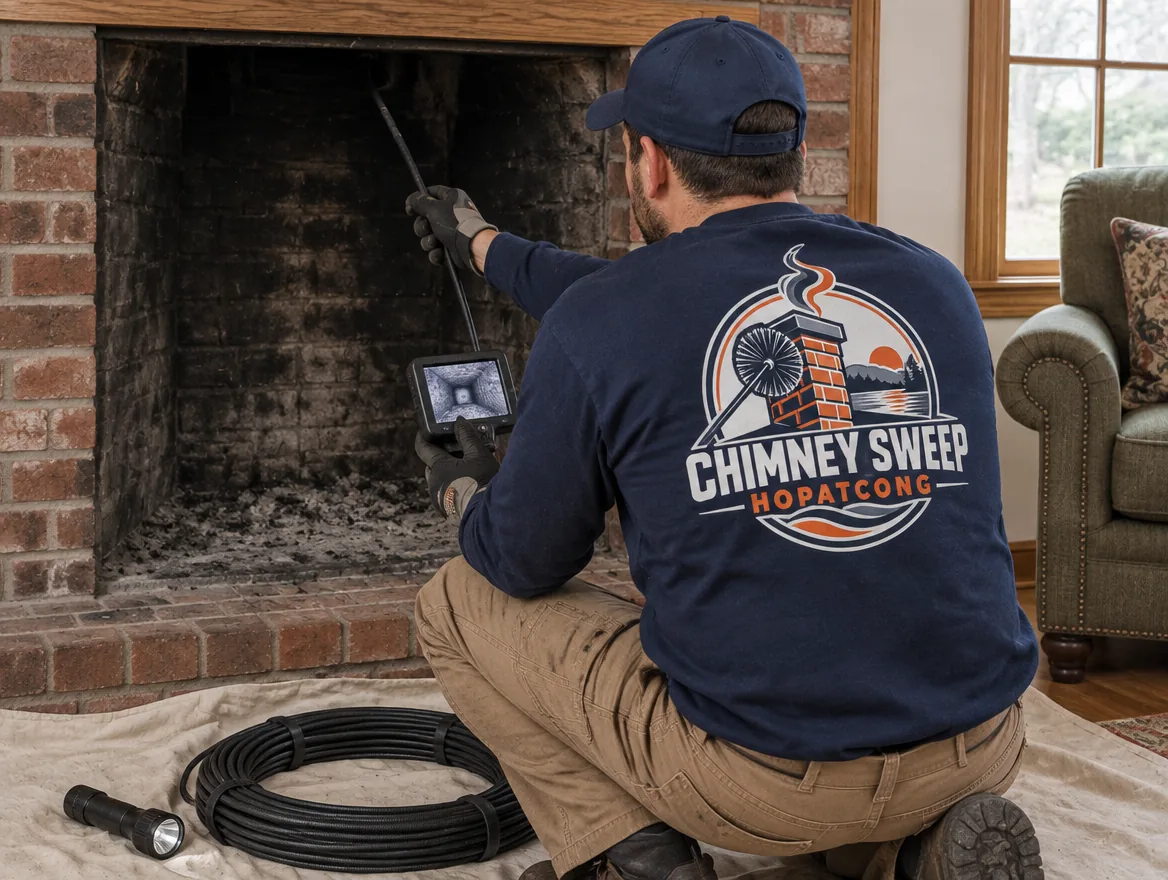
Once a year, and at any sale, new appliance or chimney fire.
Cap, crown, flashing, brickwork, flue liner, smoke chamber, damper and firebox.
NFPA 211 sets three levels of inspection. Most homes need Level 1 or Level 2.
What a chimney inspection looks for
A chimney fails quietly. Creosote builds a little with every fire, a clay flue tile cracks behind the brick, and a crown lets water in for years before a stain shows on the ceiling. An inspection is how those problems are found while they are still small.
The inspection works from the top of the stack down to the hearth. Outside, that means the cap, the crown, the flashing where the chimney meets the roof, and the brick and mortar. Inside, it means the flue liner, the smoke chamber, the damper and the firebox.
Why Hopatcong chimneys are worth a close look
Many houses here started as summer cottages and were converted for year-round use later. A chimney built for a few weekend fires may now vent a wood stove all winter, and a stove or insert added during a renovation may be connected to a flue that was never sized or lined for it. Those are exactly the mismatches an inspection is meant to catch.
Winter adds its own wear. Water that soaks into brick and mortar freezes, expands and breaks the surface apart, which is why crowns and upper courses are checked closely.
If the inspection finds heavy buildup, the next step is a chimney sweep. If it finds damage, it will point to chimney repair or liner repair.
The three levels of chimney inspection
The yearly check
A visual check of the readily accessible parts of the chimney and appliance. Right for a system that is used the same way every year with no known problems.
The camera inspection
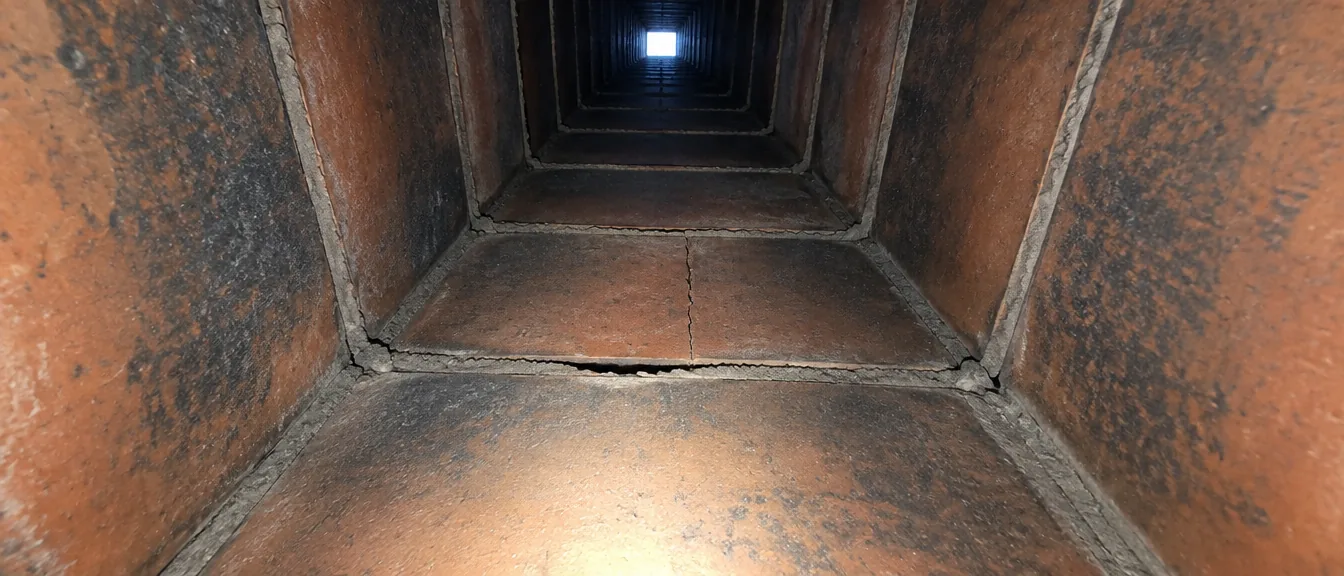
Adds a video scan of the full flue and a look at accessible attics, crawl spaces and basements. Called for at a sale, after a chimney fire or storm damage, and when the fuel or appliance changes.
The invasive inspection
Parts of the chimney or building are opened up to reach a suspected hidden hazard. Only used when a Level 1 or 2 points to serious concealed damage.
Signs you should not wait for the yearly check
- Smoke coming back into the roomThe flue may be blocked or narrowed.
- Pieces of tile or mortar in the fireboxThe liner or smoke chamber is breaking up.
- White staining on the outside brickWater is moving through the masonry.
- A loud roar or dense smoke during a firePossible chimney fire. Stop using it until it is inspected.
- Rust on the damper or fireboxRain is getting in from the top.
- A new stove, insert or furnaceThe flue has to suit the appliance now connected to it.
Common questions about chimney inspections
Do I need an inspection if I rarely use the fireplace?
Yes. Animals, nesting material, moisture and freeze-thaw damage affect a chimney whether or not it is used. NFPA 211 calls for a yearly inspection regardless of how often you burn.
Is an inspection the same as a sweep?
No. A sweep removes soot and creosote. An inspection assesses condition. They are often done together because a clean flue is far easier to assess.
Does a gas fireplace or furnace flue need inspecting?
Yes. Gas burns cleaner than wood but its exhaust is acidic and wet, and it can deteriorate a liner without leaving visible soot.